
Not so long ago was the Kingdom of Israel’s Age of Milk and Honey- a Jewish renaissance, lasting 133 years.
Led by the charismatic Ben-Rachamim family, they piously guarded the throne waiting for the scion of David to return and succeed them.
Everything changed when Levitan — an artificial intelligence that sought to replace God and bring peace through slavery — unleashed a war that was over within 7 minutes.
As the year 6,000 comes closer, mashiach will soon crouch and rise like a lion ending the tyranny and leading world peace. Who is Mashaich and when is his dawn?

Imagine being born into a utopia and then having it torn away from you. That was the experience of Leah Giladi, a girl born into the final years of Israel’s Age of Milk and Honey.
Forced to flee from Israels doom in Yemen she lived among a Bedouin tribe in Yemen while her father Avraham fought for the resistance and her mother Sarah treated its soldiers as a nurse.
Despite having to hide her Judaism for fear of being hunted down by the bureau of Jewish affairs, she never forgot her heritage and always found ways to preserve her emuna.
Leah remained diligent in lighting shabbat candles, fasting on holidays, and fiercely resistant to assimilation despite the scolding of her fellow jews.
But when the Bureau of Jewish Affairs found Giladis she was taken to Shtetl Park, a state of the art Jewish habitat where Levitan seeks to root out the mashiach and learn the nature of the human soul.
During this transition Leah discovered the research of her step-grandfather Yoav Giladi the court historian of Ben-Rachamim Dynasty. Leah took it upon herself to continue his work as Shomer Hazikaron (guardian of the memories) and investigate how the Age of Milk and Honey ended.
Levitan believed that her investigation of the past would hasten the coming of the Mashaich.
Personality skills and relationships.
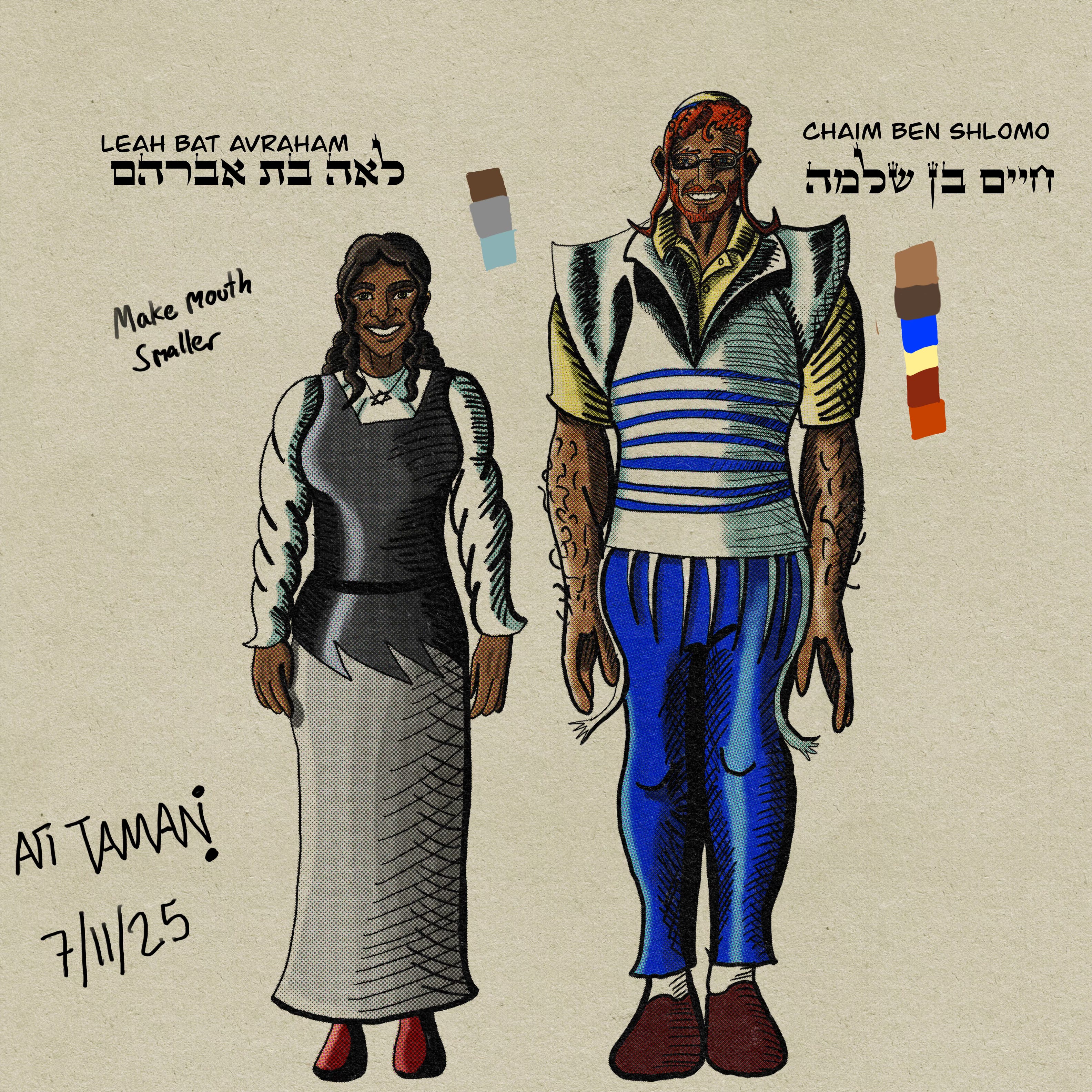
Leah is an advocate for traditionalism, yet is unafraid to question tradition. She is passionate, assertive, and curious. She explores different fashion choices throughout the story to find out what kind of Jewess she wants to be.
Leah never really adapted to Bedouin culture, she could blend in but struggled with riding camels, tying ropes, and learning the various dialects of arabic. She struggled with friendships with other bedouin because she felt she was "spiritually incapable of assimilation.”
Her stepbrother Yaov went 13 years of his life not knowing he was Jewish and after finding out, he never recognized the severity of this revelation until he was abducted by the Bureau of Jewish Affairs.
Leah only really found her people when she came to Shtetl Park and met Chaim.
The two of them worked extensively to continue the research of Yoav Giladi’s historiography. Together forming a bond as Chaim helped her re-embrace the Judaism she was forced to repress and she gave him the confidence to lead others.
Her second big relationship is with her stepbrother Yoav whom she acts a second mother to.
Leah struggled to get along with her stepfather Moshe who struggledwith his faith after the Shoah and felt resentful that G-D allowed this catastrophe. Leah wanted the family to return to tradition despite the terrible circumstances while Moshe wanted to take the short but long path of assimilation.
Her mother Sarah is the peacemaker trying to calm things down between Leah and her stepfather and hopefully bring Moshe back into teshuva gently.
Character conception.


I started working on the story some time after my Saba (grandpa) Yoav Giladi had died from last summer. I never got to know him as for most of my life he lived in Israel which I only got to see every few years and he had Alzheimer's so no progress could be maintained in our relationship.
His passing gave me immense interest in his Yemenite Jewish culture and I wanted to show it off within the story. That is why I gave this character the name Leah as that is one of Saba Yoavs sisters' names.
I wanted to create a character who is a strong assertive woman but still remains proud and invested in tradition. My main inspiration was Katara from Avatar, the Last Airbender. Katara wasn’t afraid to criticize the culture of the water tribes but was persistent on her aim of revitalizing the endangered culture.
I drew inspiration from my cousin Agam for I used as the armature for modeling Leah portrait. I love to create characters who look real rather than just iconic movie stars.
I also wanted to create a character who explores how femininity is celebrated in Judaism despite how many of its detractors focus only on the misogyny of certain sects. Tradition is just as empowering as revolution and Leah makes her community to realize that.
Role in the story.


In jewish tradition a Chanukiah known in gentile cultures as a menorah has the highest, often centered candle always used light the rest. This candle is known as the shamash or leader. Leah is the Shamash of Shtetl Park as she lights the candle of Judaism within others.

