Are We the Good Guys? What the SS Never Asked.
How Jews Can Find Moral Certainty in a Demoralizing World

Since October 7th, I have ping-ponged ideologically in my views of Israel, swinging between anger, grief, hope, and doubt. I often ask myself: are we the “good guys” because questioning ourselves is what separates us from the “bad guys.”
With all the demoralization caused by anti-Israel and antisemitic propaganda, I found myself having to constantly remind myself why I believed Israel’s cause was just.
The Moral Blackmail of Holocaust Comparisons
One tactic the pro-Palestinian side uses is to inflict moral blackmail on Jews and other supporters of Israel. The most common method is to equate Israel’s actions with those of the Nazis, knowing that the wounds of the Shoah are still fresh and that reopening them can sow doubt among conflicted Jews.
To a layperson, it works. But to someone familiar with the history of the Shoah through survivor testimony, literature, and academic study, the differences could not be more significant.
Evolutionary psychologist Gad Saad often describes “pathogenic ideas” as ideas that spread through populations much like viruses spread between hosts. I believe Holocaust distortion functions in this way, particularly among Jews wrestling with their relationship to Jewish identity and Israel.
Research suggests that Jewish identity and attachment to Israel are closely linked. According to a Pew Research Center survey, “The share of adults who are at least somewhat attached to Israel is twice as high among Jews by religion (67%) as among Jews of no religion (33%).” While this does not explain every individual’s views, it suggests that stronger religious and communal engagement is associated with a deeper connection to Israel.
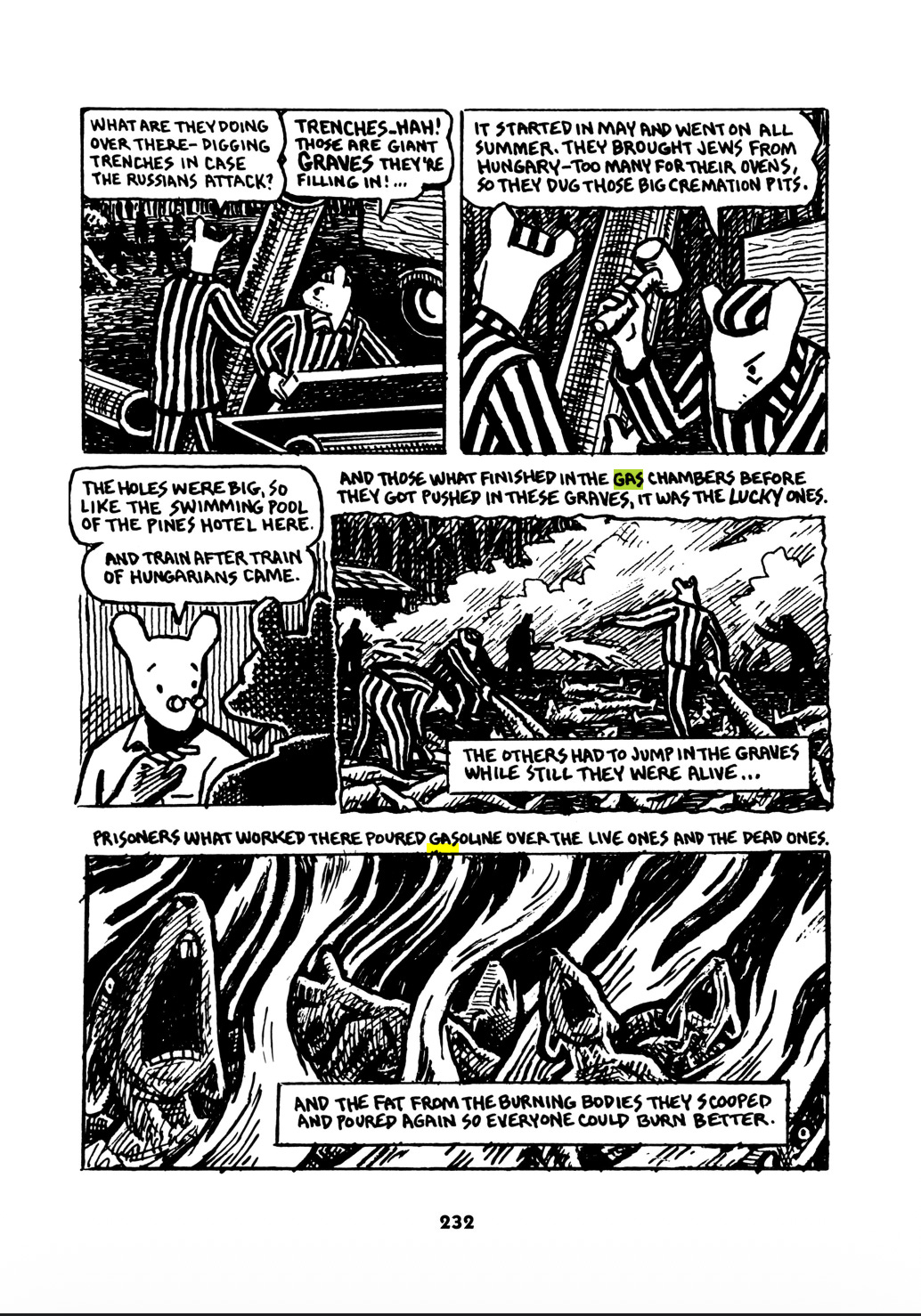
Knowledge of Jewish history, Holocaust education, and active participation in Jewish communal life may therefore make people more resilient against misleading Holocaust comparisons and other forms of historical distortion, including those promoted by the legendary author of Maus: A Survivor’s Tale, Art Spiegelman.
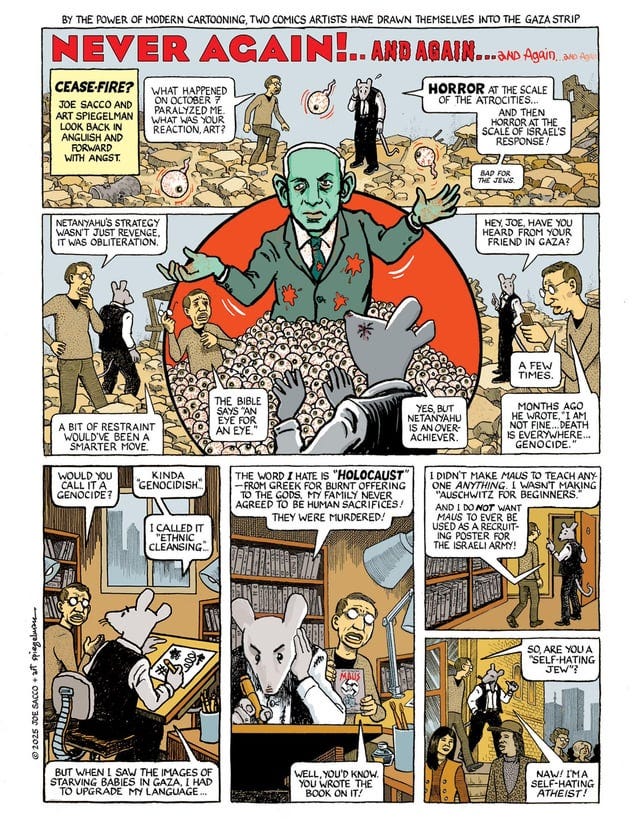
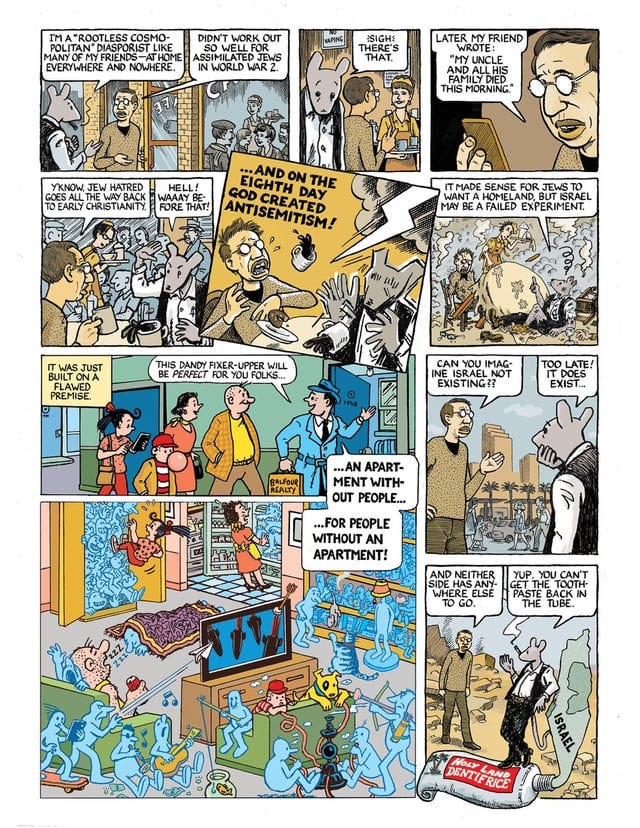
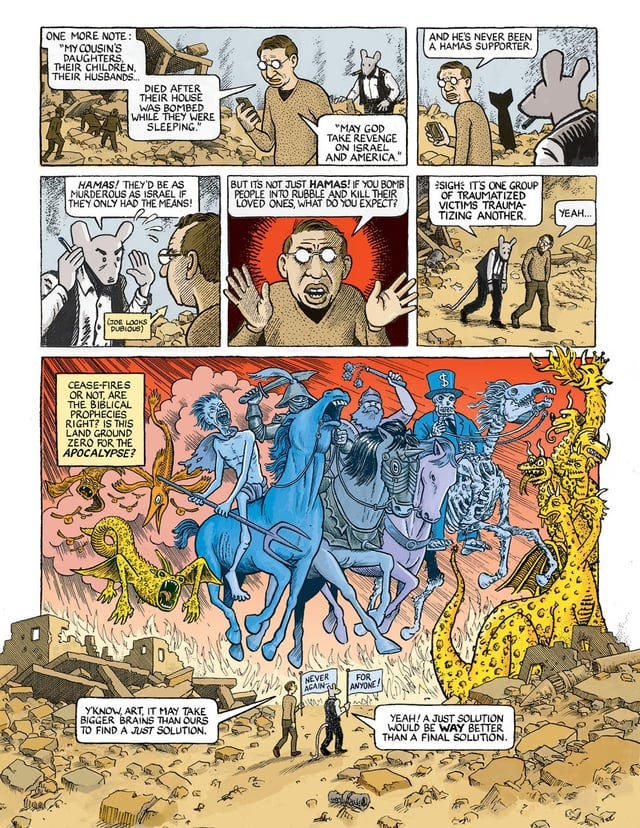
Recently, Spiegelman collaborated with far-left pro-Palestine author Joe Sacco on a cartoon that drew a parallel between Israel and the Nazis. For someone with Spiegelman’s platform, whose work has become a cornerstone of Holocaust education, lending his voice to these comparisons is profoundly irresponsible.
Within the cartoon, Spiegelman describes himself as a “ROOTLESS COSMOPOLITAN DIASPORIST,” a description that lines up with Maus. Compared with Night by Elie Wiesel, Maus contains relatively few explicit depictions of Jewish tradition or spirituality. Instead, it focuses on survival, trauma, and the relationship between Art and his father, Vladek.
Spiegelman later describes Israel as a “FAILED EXPERIMENT” and writes, “AND ON THE EIGHTH DAY GOD CREATED ANTISEMITISM!”
To dismiss Israel as a “failed experiment” ignores the depth of Jewish history in the land. Our history has been excavated through archaeological discoveries such as King Hezekiah’s Tunnel, built to divert Jerusalem’s water supply during the Assyrian siege described in the Bible.
It was not God who created antisemitism but human evil, a truth Spiegelman himself illustrates through the Hitler quotation that opens Maus: “The Jews are undoubtedly a race, but they are not human.”
And by saying that, he overlooks the prejudice, alienation, and even violence that Jews throughout the diaspora have faced simply for sharing the same faith and heritage as Israelis.
Without understanding the perspective informing Spiegelman’s arguments, they can appear compelling. In moments of moral uncertainty, emotionally charged Holocaust comparisons appeal to guilt rather than historical understanding. To see why these comparisons fail, we must first remember what the Holocaust actually was.
Why the holocaust comparison doesn’t work.
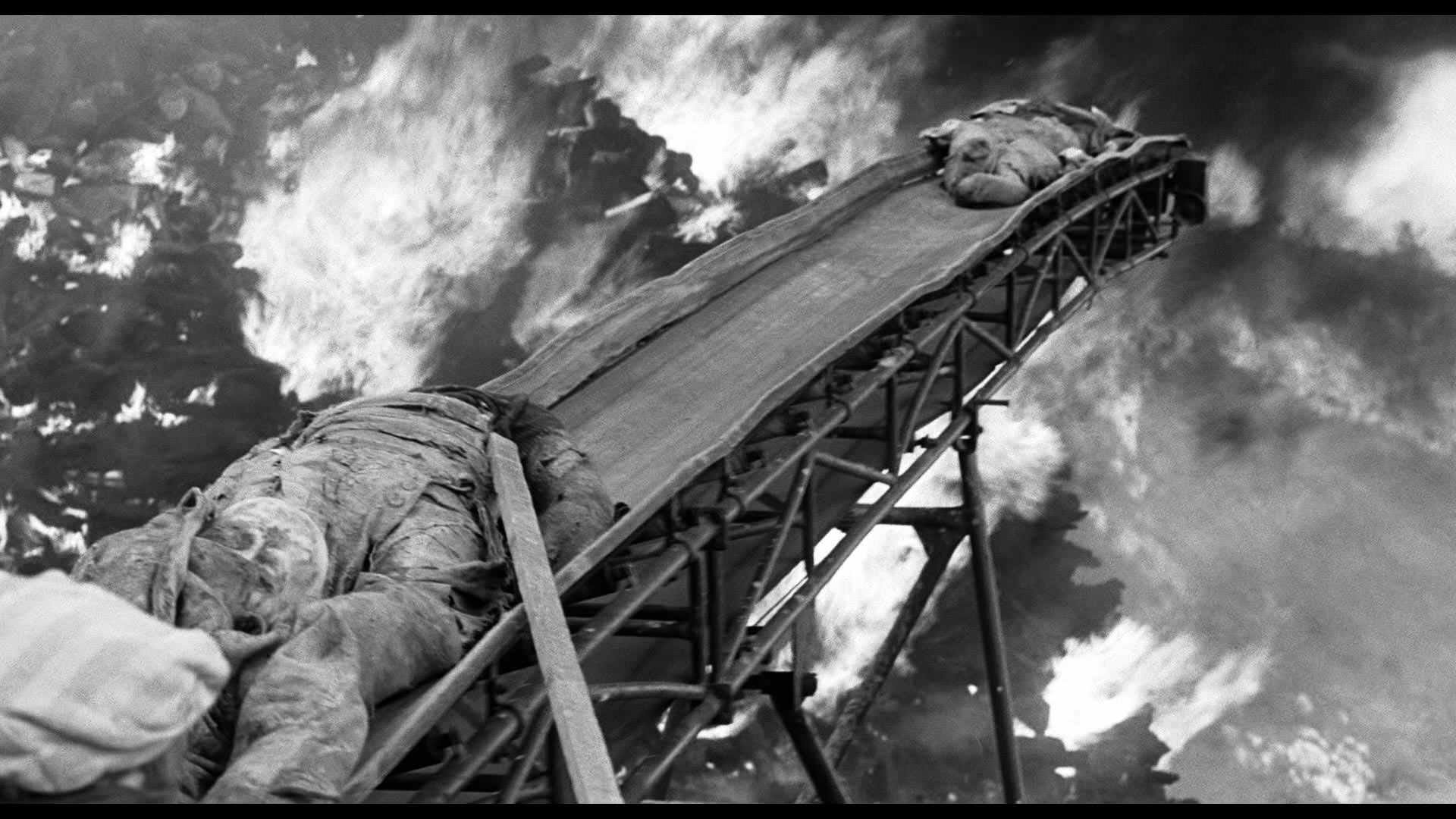
This Tisha B’av I watched Steven Spielberg's Schindler's List for the first time. I have read books about the Shoah, watched some documentaries, and listened to survivors, but seeing it in cinematic form with such routine brutality felt different.
While I am aware that Spielberg toned down the brutality so audiences could stomach it, it does an excellent job exploring how ferocious, disrespectful, and uncaring the Nazis were.
When the pro-Palestine side compares Israel's actions to the Shoah, they should watch Schindler's List with sincere honesty and then realize how the tragic experiences of war that many Palestinians suffer pale in comparison to the catastrophe of the Shoah.
In the film, we see a wide spectrum of cruelty, such as Jews having their businesses seized just like my Great-grandparents in Vienna, to an entire ghetto methodically liquidated with door-to-door executions and abductions.
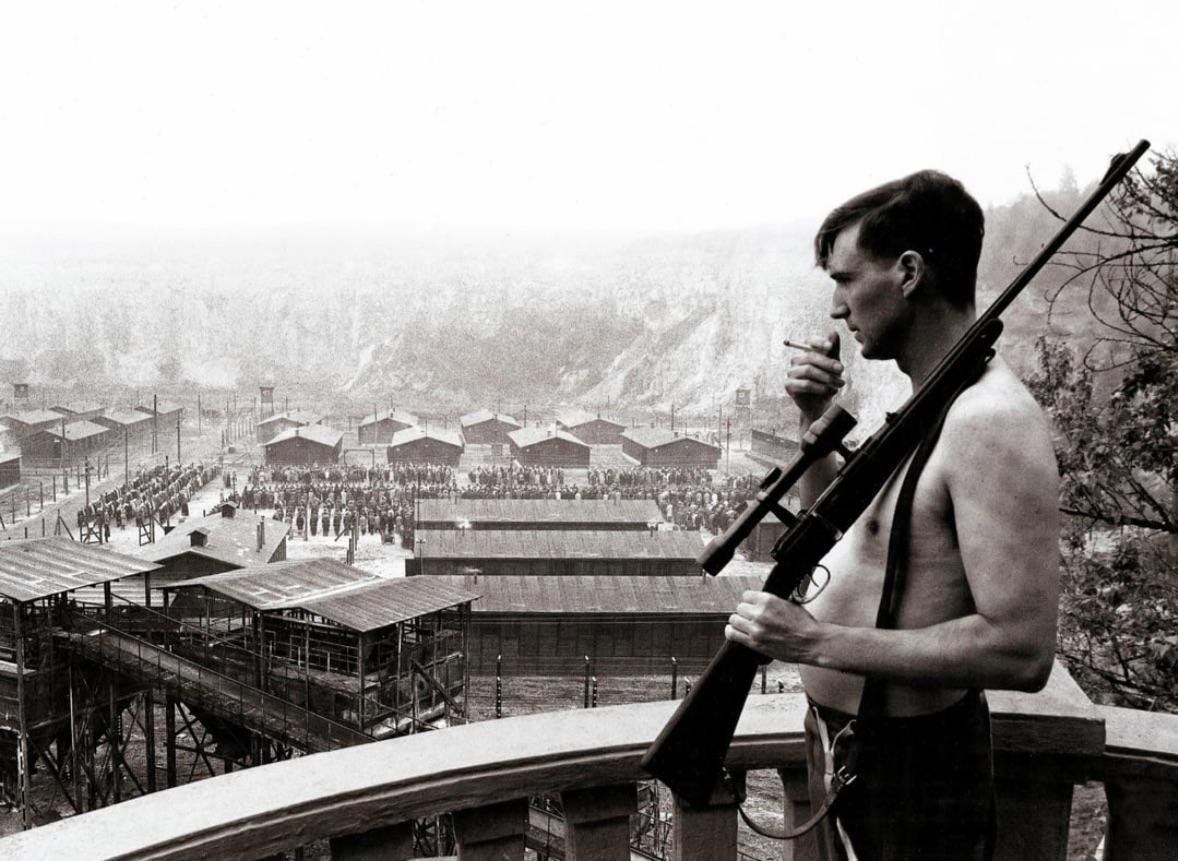
Another notable aspect is the portrayal of Plaszów concentration camp commandant Amon Göth, played by Ralph Fiennes, who cheerfully snipes slave laborers from his balcony. We see him beating the houseworkers in his villa, contemplating raping a female prisoner, and forcing prisoners to run naked to inspect their health.
Most brutally, we see Göth forcing prisoners to dig up the remains of the previously slaughtered Jews and burn them on a mountain of corpses to erase evidence. His only compunction about this horrific action is the paperwork he would have to manage, not the cruelty of forcing Jews to burn their own families.
In addition, while Spielberg is on the more secular side of Judaism, faith and culture play a big role in the film. We see in the first scene Hasidic Jews singing tunes while lighting candles for Shabbos. We see Schindler insist that one of his workers observe the Shabbos, and we hear authentic prayers. And in the end, he received a ring with an inscription from the Talmud mentioning how "Whoever saves one life saves the world entire.”
Schindler’s List reaffirmed for me why Holocaust comparisons fail. Israelis are not forcing Gazans to burn the bodies of their own families or subjecting them to slave labor. The IDF Medical Corps is bound by an oath to “extend a helping hand… to friend or foe,” reflecting a commitment to treat the wounded regardless of allegiance. That stands in stark contrast to the Kraków Ghetto infirmary, where sick Jews chose poison rather than fall into Nazi hands and be murdered.
The only acts in the Israeli-Palestinian conflict that come close to the Nazis are, of course, the brutal acts of the Palestinians. The Ghetto liquidation scenes in Schindler’s List reminded me of footage and stories I heard of the attacks on the Nova Festival and Kibbutzes during October 7th. The Nazis’ sudden and brutal separation of Jewish families finds a tragic echo in the abduction of Israeli hostages on October 7th, many of whom never saw their families again.
Spielberg, despite belonging to the more secular side of the Jewish diaspora, has never drawn Holocaust comparisons to criticize Israel in the way Spiegelman has. While he has expressed concern for the suffering of Palestinian civilians, he has not equated Israel with Nazi Germany.
In the aftermath of October 7th, Spielberg continued documenting Jewish history by recording survivors’ testimonies through the USC Shoah Foundation. Spiegelman, by contrast, used his platform to criticize Israel’s response to the attacks, giving October 7th relatively little attention while arguing that Israel’s military campaign was “bad for Jews” and claiming that Israel was using Maus as a manual for genocide.
So Are we the Baddies?
Often, when wrestling with the moral questions surrounding this conflict, I think back to a Mitchell and Webb comedy sketch.
In the sketch, two SS officers begin to wonder whether their skull insignia makes them look like the bad guys. As the conversation unfolds, they slowly realize they might actually be the villains.
The joke works because it is absurd. The real SS was Heinrich Himmler’s ideological elite. Men such as Amon Göth, Adolf Eichmann, and Reinhard Heydrich did not spend their time questioning the morality of the Final Solution.
The Nazi hatred for the Jewish people was irrational; they could have used Jewish talents and expertise to improve Germany just like the Americans, but instead Germany chose a system prioritizing futile racial purity. Even when Hitler realized he had lost the war, he still chose to “oblige the leaders of the nation…to merciless resistance against… international Jewry.”
Israel, by contrast, is a democracy whose citizens regularly debate the morality of their government’s actions. Before October 7th, the country was deeply divided over judicial reform, with many reservists, including members of the Air Force, refusing to report for duty in protest.
That culture of self-examination is also reflected in Israel’s founding ideals. The Declaration of Independence states that the state “will ensure complete equality of social and political rights to all its inhabitants irrespective of religion, race or sex; [and] will guarantee freedom of religion, conscience, language, education and culture.”
Arab Muslims, Christians, Druze, Circassians, Armenians, and other minorities in Israel can vote, run for the Knesset, attend Israeli universities, own businesses, and participate in public life under the same civil legal system. Recognized religious communities also maintain their own religious courts for matters such as marriage and divorce.
Today, there is no free Jewish civilian community in Gaza; the only Jews held there after October 7th were hostages abducted during the attacks. Israel is the only country in the Middle East with a growing Christian population, while everywhere else is shrinking.
While Israel is far from perfect, I believe it remains on the side of good because its political culture values self-reflection, debate, and moderation over blind ideological zeal.
When confronted with the guilt and emotional pressure of Holocaust comparisons, remembering the historical record serves as a vaccine against the pathogenic ideas that foster moral confusion and self-doubt.